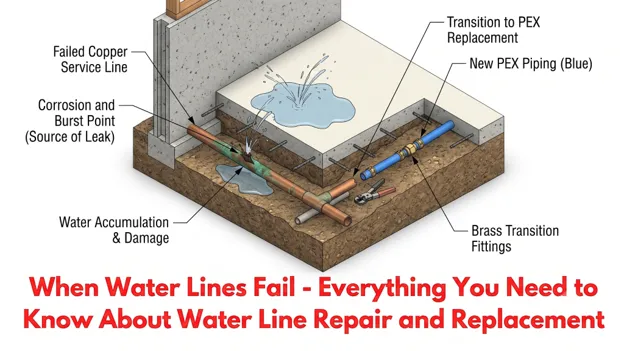
When Water Lines Fail Everything You Need to Know About Water Line Repair and Replacement
Table of Contents
What Causes Residential Water Lines to Fail?
Signs of a Broken Water Line Under Your Yard
Repair or Replace? How We Make the Call
The Water Main Break Repair Process, Step by Step
Trenchless Water Line Replacement and Pipe Bursting Technology
Copper vs. PEX Water Service Line: Which One Belongs Under Your Yard?
Main Water Line Replacement Cost in 2026
How Long Does Water Line Replacement Take?
Local Help for Youngsville, Raleigh, Wake Forest, and the Triangle
Conclusion: Protect Your Home Before a Small Leak Becomes a Big Problem
When Water Lines Fail Everything You Need to Know About Water Line Repair and Replacement
Your water service line does quiet, thankless work. Buried a few feet beneath your yard, it carries every drop of water your household uses, from the municipal water service connection at the street to the plumbing inside your walls. Because it sits out of sight, most homeowners never give it a thought until the day water lines fail and suddenly there is no pressure at the tap, a swamp forming in the lawn, or a water bill that makes no sense.
When residential water lines fail, the questions come fast. Is this a repair or a full replacement? What will it cost? How long will the water be off? Will the yard survive the work? We hear these questions every week from homeowners across Youngsville, Raleigh, Wake Forest, and the greater Triangle area, and the honest answer is always the same: it depends on what failed, why it failed, and how quickly the problem was caught.
We put this guide together to take the panic out of that moment. Drawing on years of hands-on underground water line leak repair and complete residential water service line replacement work, the team at Plumb Smart Plumbing walks you through the warning signs, the repair process, trenchless options, material choices, realistic 2026 pricing, and honest timelines, so you can make a confident decision instead of a rushed one.
What Causes Residential Water Lines to Fail?
Water service lines rarely give out without a reason. In our corner of North Carolina, a handful of culprits show up again and again:
Age and outdated materials. Galvanized steel and polybutylene lines installed decades ago corrode from the inside or grow brittle with time.
Expansive clay soil. Triangle-area clay swells when wet and shrinks when dry, flexing buried pipe season after season until something gives.
Tree root intrusion. Roots hunt for moisture and will wrap around, shift, or crush a service line over the years.
Corrosive soil and water chemistry. Acidic conditions slowly eat away at copper and steel from the outside in.
Freeze and pressure events. A hard cold snap or a sudden pressure surge can split a pipe that was already weakened.
Poor original installation. Shallow burial, missing bedding material, or cheap fittings shorten a line's life dramatically.
The cause matters, because it shapes the fix. A root-crushed section on an otherwise healthy copper line is a very different job from a polybutylene run that is deteriorating along its entire length.
Signs of a Broken Water Line Under Your Yard

Catching a failing line early is often the difference between a targeted repair and a full excavation. Watch for these warning signals:
A sudden or gradual water pressure drop in home fixtures, especially at ground level
Soggy patches, standing water, or one strangely lush green strip while the rest of the lawn is dry
A water meter that keeps spinning with every fixture in the house turned off
An unexplained jump in the monthly water bill
Rusty, cloudy, or discolored water at the tap
Hissing or rushing sounds near the foundation or the meter box
New cracks in the driveway, walkway, or foundation caused by soil washout
Any one of these signs of a broken water line under yard or driveway surfaces deserves a professional look. Left alone, a small underground leak erodes supporting soil, invites contamination into the line, and can quietly undermine hardscaping and foundations.
Repair or Replace? How We Make the Call
Not every leak means starting over. When homeowners search for "water line repair near me," what they usually need first is an honest diagnosis and that is where we start every job.
If the line is relatively young, made of sound material, and the damage is isolated. A single root puncture, a failed fitting, a section nicked during digging, a targeted repair restores service quickly and affordably. This often includes water meter to house line repair at the connection points, where leaks most commonly develop, along with a shut-off valve replacement if the existing valve is corroded or seized open.
Replacement becomes the smarter investment when the pipe material itself is the problem. Galvanized steel, polybutylene, and thin-wall copper in aggressive soil tend to fail again and again. Paying for a second or third spot repair on a dying line is money buried in the yard. In those cases, a complete replacement costs more upfront but ends the cycle for good.
The Water Main Break Repair Process, Step by Step

Repairs feel far less stressful when you know exactly what is coming. Here is the water main break repair process the way we run it:
Stop the water: We shut the line down at the meter or the home's main valve to prevent further damage and soil erosion.
Locate the failure precisely: Acoustic listening equipment and line tracing pinpoint the leak, so we dig once in the right place.
Coordinate the utility side: Everything from the street to the meter belongs to the city or county; everything from the meter to the house is the homeowner's responsibility. We schedule utility locates through North Carolina 811 and work cleanly around the municipal water service connection.
Access the line: Depending on depth, length, and landscaping, that means a compact excavation or a trenchless approach.
Repair or replace, then pressure test: Nothing gets backfilled until the line holds pressure and passes inspection.
Restore the site: Soil compacted, surfaces patched, and your water flowing again.
Trenchless Water Line Replacement and Pipe Bursting Technology
The old way to replace a service line meant a trench from the meter to the foundation straight through gardens, irrigation, and sometimes the driveway. Trenchless water line replacement changed that equation.
With pipe bursting technology, we dig two small access pits: one near the meter, one near the house. A bursting head is then pulled through the old pipe, fracturing it outward into the surrounding soil while dragging the brand-new line into place along the exact same path. Mature landscaping survives, lawns stay intact, and concrete rarely needs to be cut.
Trenchless is not the answer for every property. Fully collapsed lines, major reroutes, and certain soil conditions still call for open excavation. But when conditions allow it, trenchless work is faster, cleaner, and far less disruptive and we will always tell you which method genuinely fits your situation rather than defaulting to the most expensive one.
Copper vs. PEX Water Service Line: Which One Belongs Under Your Yard?
The copper vs PEX water service line question comes up on nearly every replacement we quote, and the truth is that both are excellent when matched to the right conditions.
Copper brings a proven service life of 50 years or more, handles UV exposure at entry points, and carries strong resale confidence. Its trade-offs are a higher material cost and, in acidic Triangle soils, a tendency to develop pinhole leaks over time without proper protective measures.
PEX is flexible, highly freeze-resistant, and can usually be pulled in one continuous run with no buried joints and buried joints are where most leaks begin. It pairs naturally with trenchless installation and costs less per foot. Its limits: it must stay out of direct sunlight and depends on quality fittings at each end.
Our recommendation always comes down to your soil, your budget, and how the new line will be installed. It is the same conversation we have with builders on new construction plumbing projects, where choosing the right service line material on day one prevents the very failures this guide exists to fix.
Main Water Line Replacement Cost in 2026
Pricing is the question behind every other question, so here are straight answers on main water line replacement cost.
For most homes in our service area, water line replacement cost 2026 figures land roughly between $2,500 and $8,000 for a complete meter-to-house replacement. Short, shallow, unobstructed runs come in at the low end; long, deep, or heavily obstructed runs push higher. Targeted repairs typically range from a few hundred dollars to around $1,500, depending on access and depth.
The variables that move the number most:
Length and depth: Length and depth of the run from the meter to the home
Method: trenchless versus open trench (trenchless can cost more per foot but saves heavily on landscape and concrete restoration)
Material: copper carries a higher material cost than PEX or HDPE
Obstacles: driveways, retaining walls, mature trees, and irrigation systems
Permits and inspections: inspections required by your city or county
Be cautious with any contractor who quotes a firm price sight unseen. An accurate number requires locating the line, confirming its depth and material, and reading the site which is exactly why we provide detailed written estimates before a shovel ever touches the ground.
How Long Does Water Line Replacement Take?

Here is some genuinely good news: this is rarely a week-long ordeal. So, how long does water line replacement take in the real world?
Spot repairs: usually a few hours once the leak is located
Trenchless replacement: most jobs finish in a single day, with water restored by evening
Open-trench replacement: typically one to two working days, plus inspection and site restoration
Utility locates and permits can add a couple of business days of lead time before digging begins though emergencies move much faster. Through it all, we keep actual water downtime measured in hours, not days.
Local Help for Youngsville, Raleigh, Wake Forest, and the Triangle
Water lines in North Carolina face a very specific mix of stresses: expansive red clay, hot dry summers followed by saturated winters, fast-growing tree species, and neighborhoods where 1970s galvanized lines sit a mile from brand-new builds. Local experience matters here, because the right call in Wake Forest clay is not the same call a contractor would make in sandy coastal soil.
That is the work we do every day at Plumb Smart Plumbing serving homeowners, property owners, remodel contractors, and custom home builders across Youngsville, Raleigh, Wake Forest, and the surrounding Triangle area with straight answers, clean job sites, and craftsmanship we stand behind.
Conclusion: Protect Your Home Before a Small Leak Becomes a Big Problem
A failing water line never picks a convenient moment, but it almost always sends warnings first. A pressure drop, a wet patch in the yard, a bill that refuses to add up, these are your home asking for attention. Acting on those early signals is the single best way to turn a potential excavation into a same-day repair.
And when replacement truly is the right call, today's options are better than they have ever been. Trenchless methods protect the landscaping you have spent years building, modern materials like PEX and Type L copper are engineered to outlast the mortgage, and a properly installed service line should be something you never have to think about again. Whether you own a forty-year-old ranch in Raleigh or you are a builder planning service lines for an entire new community, the principles hold: right material, right method, right installation.
If anything in this guide sounds like what is happening under your yard, do not wait for it to get louder. Call Plumb Smart Plumbing to talk through what you are seeing, request a free estimate, or schedule a service visit at a time that works for you. Our team is glad to answer questions, explain your options in plain language, and help you plan for the long term, visit Plumb SmartPlumbing.com to learn more about our services and get started today.