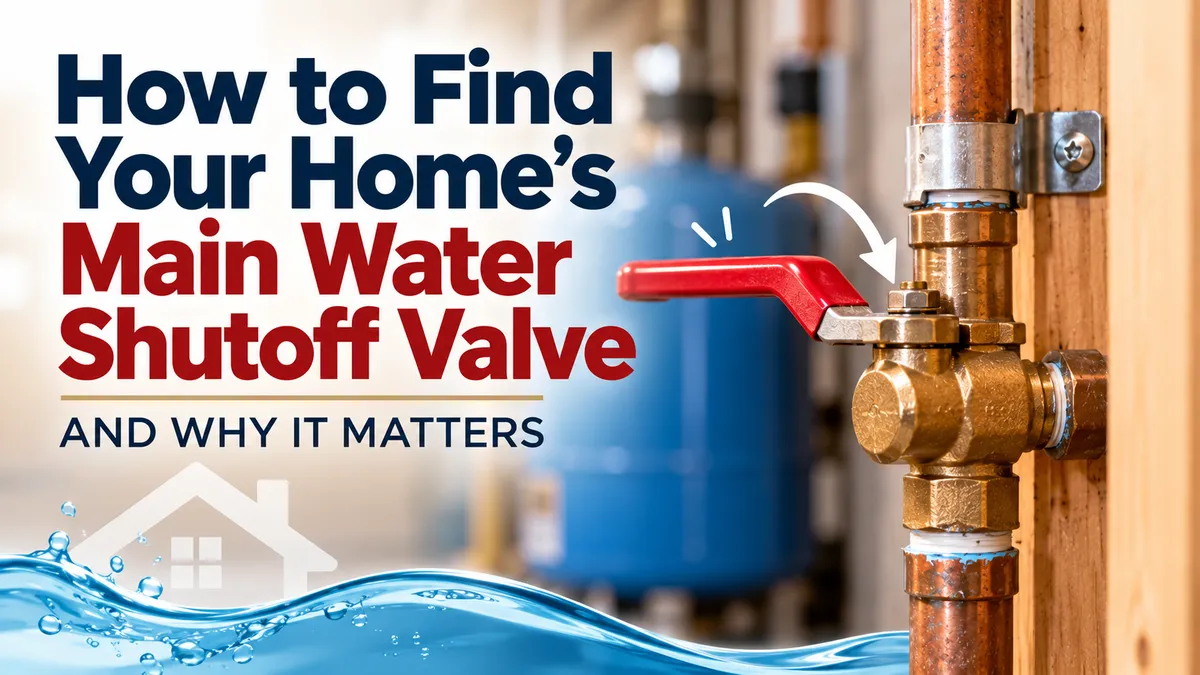
How to Find Your Home's Main Water Shutoff Valve and Why It Matters
A plumbing emergency can happen when you least expect it. A pipe may burst, a water supply line could break, or a plumbing fixture might suddenly begin leaking. When these situations occur, knowing how to stop the water flowing into your home can make a significant difference.
Unfortunately, many homeowners don't know where their main water shutoff valve is located until they need it.
At Plumb Smart Plumbing, we believe that understanding your home's plumbing system is an important part of responsible homeownership. You don't have to be a plumbing expert, but knowing a few basics can help you respond quickly to unexpected problems.
One of the most valuable things you can learn is how to locate and operate your home's main water shutoff valve.
What Is a Main Water Shutoff Valve?
Your main water shutoff valve is a plumbing component that controls the incoming water supply to your home.
When the valve is open, water can travel through your plumbing system to supply fixtures such as sinks, toilets, showers, bathtubs, washing machines, and other water-connected appliances.
When the valve is closed, it stops incoming water from entering the portion of the plumbing system it controls.
This makes the main shutoff valve especially important during plumbing emergencies, repairs, and certain maintenance procedures.
Think of it as one of your home's most important emergency controls.
Although turning off the valve won't remove water already inside your pipes, it can prevent additional water from entering the system and contributing to an active leak.
Where Is the Main Water Shutoff Valve Located?
Every home is different, and there is no single location where all main water shutoff valves are installed.
The location often depends on the home's age, foundation type, water source, and original plumbing design.
If you're trying to locate yours, here are some common places to begin looking.
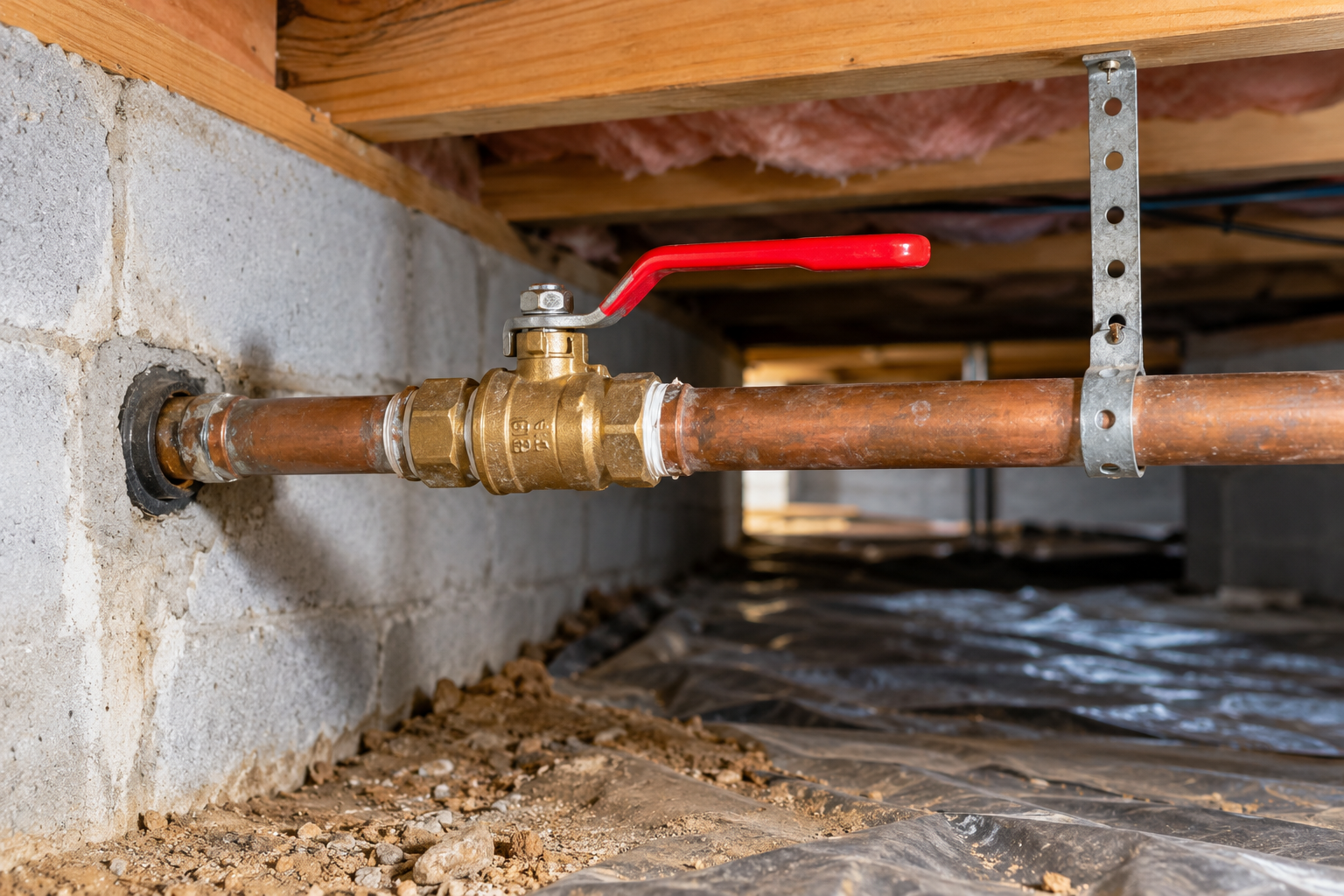
1. Crawl Space
Many homes throughout North Carolina are constructed with crawl spaces.
In these homes, the main water shutoff valve may be located underneath the house, near the area where the incoming water supply line enters through the foundation.
If your home has a crawl space, look for the main water supply pipe and check whether a shutoff valve is installed along that line.
Safety Tip: Never enter a crawl space that has standing water, exposed electrical hazards, damaged structural components, or other unsafe conditions. Contact a professional if the area cannot be accessed safely.
2. Garage
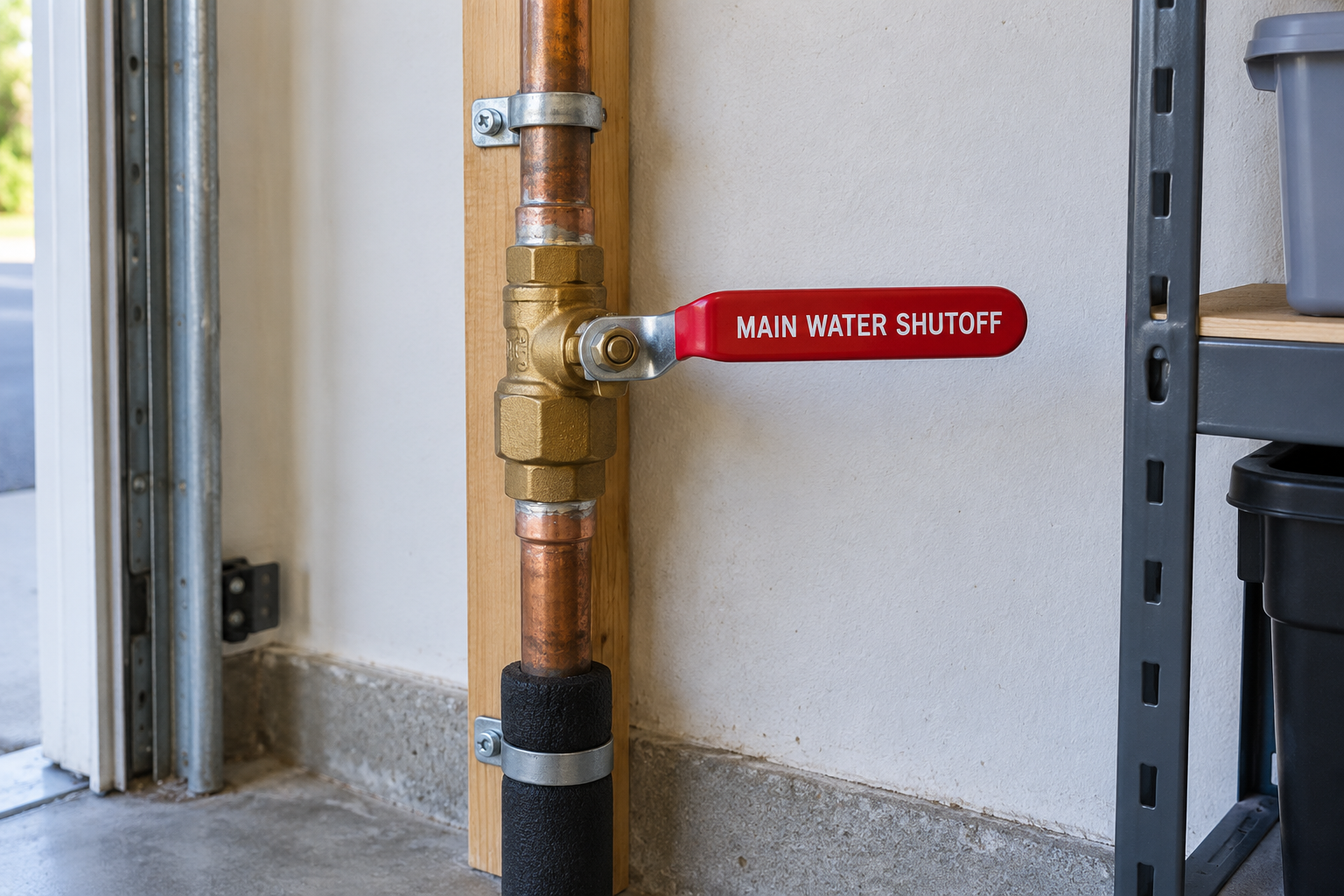
Some homes have their main water shutoff valve installed inside the garage.
Check along the walls, near exposed plumbing lines, or around the area where the water supply enters the home.
The valve may be located close to the water heater or another plumbing connection, although this is not always the case.
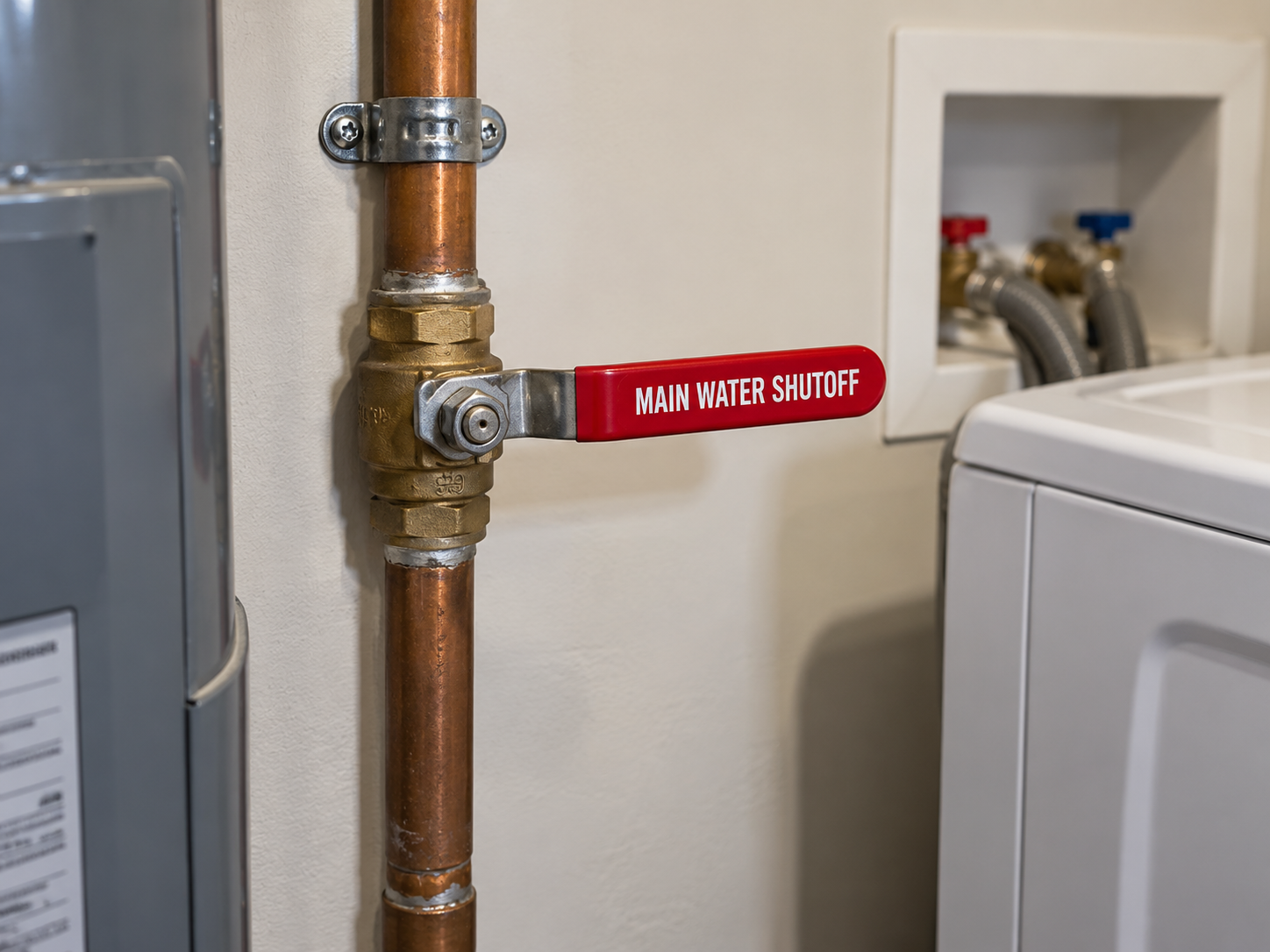
3. Utility Room or Laundry Room
If your home has a designated utility room, mechanical closet, or laundry area, this may be another place to look.
Check for an incoming water supply pipe and a valve installed before the pipe branches off to serve other fixtures.
Remember that not every valve in a utility room controls the entire home. Some valves only control individual appliances or plumbing fixtures.
4. Near the Water Meter
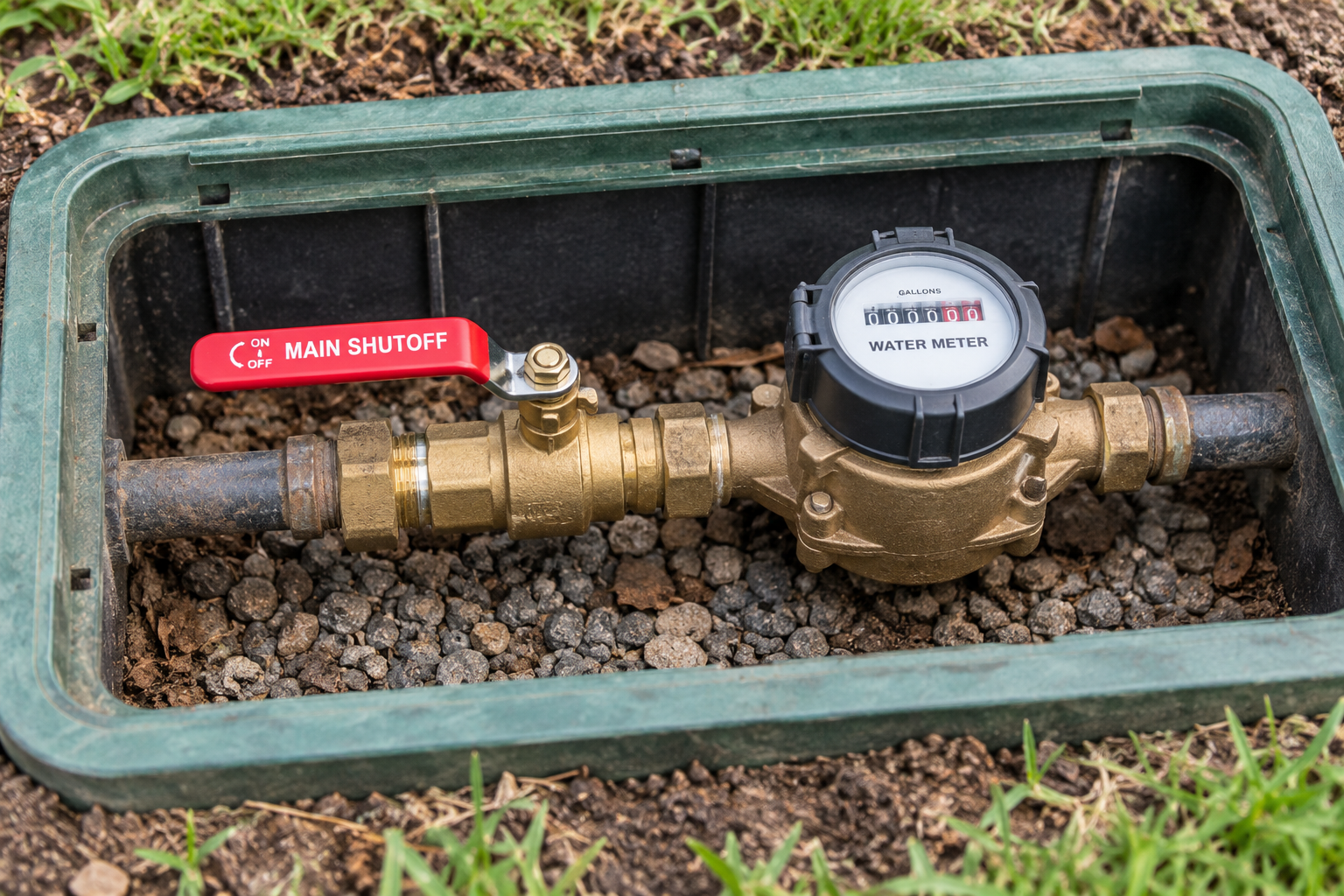
If your home receives water from a municipal water system, your water meter may be located near the street, sidewalk, driveway, or property boundary.
Some properties have a homeowner-accessible shutoff valve near the meter.
However, the valve connected directly to the utility meter may belong to the water provider and may not be intended for homeowner use.
If you cannot identify a separate customer shutoff valve, contact your water provider or a licensed plumber for guidance.
5. Near the Well Pressure Tank
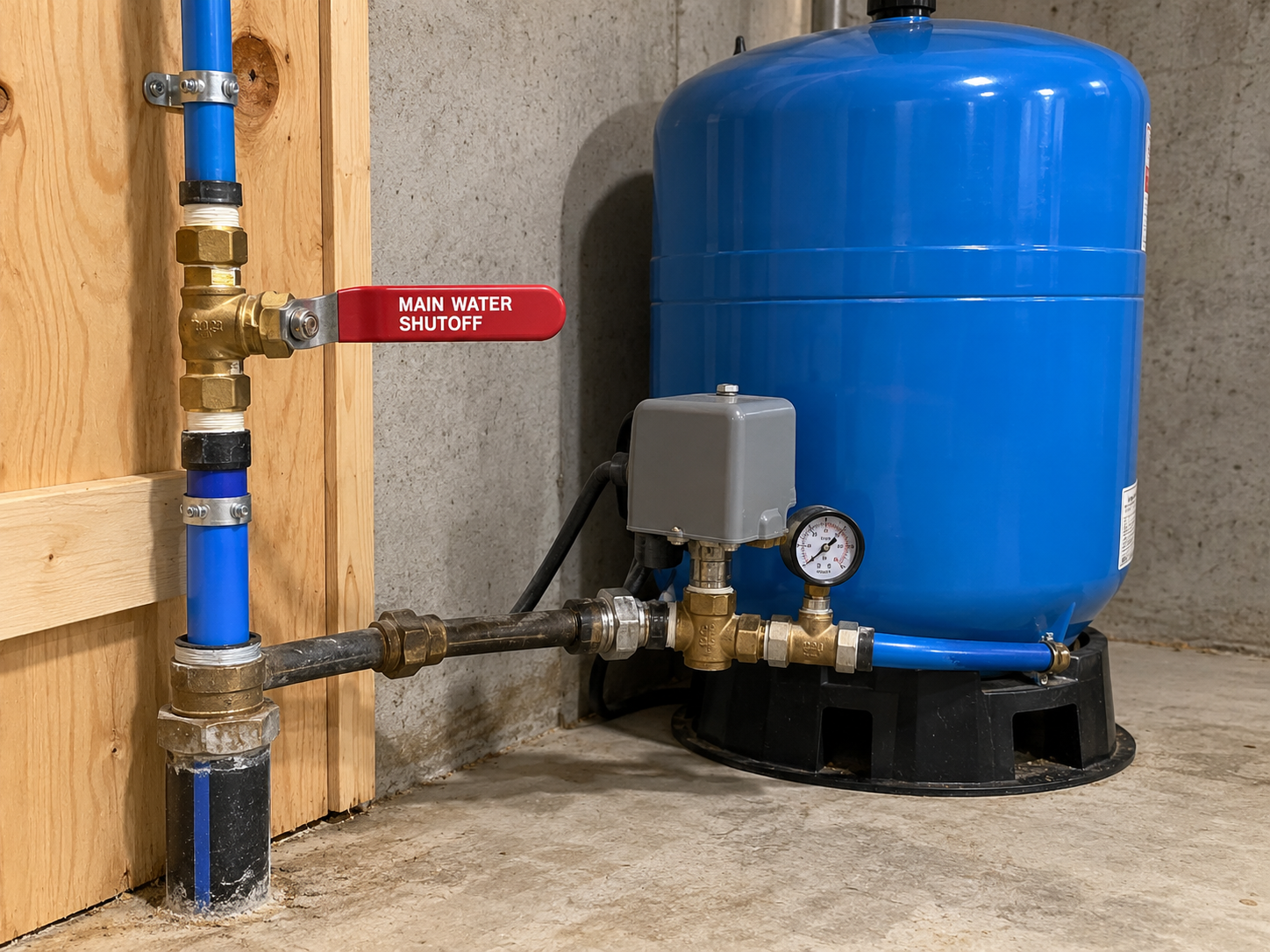
Homes supplied by private wells have different plumbing arrangements than homes connected to municipal water.
If your home uses a well, check near the pressure tank, water treatment equipment, or the location where the water supply line enters the building.
Depending on the system, there may be multiple valves controlling different sections of the plumbing.
The well pump may also need to be shut off during certain plumbing emergencies.
How Can You Tell Which Valve Is the Main Shutoff?
Your home may contain several shutoff valves.
For example, toilets, sinks, water heaters, and other plumbing fixtures often have their own valves that control water to that particular fixture or appliance.
The main water shutoff valve is different because it controls the incoming water supply for the home or a major portion of the plumbing system.
One way to help identify it is to follow the incoming water supply pipe from where it enters the building.
The main shutoff valve is commonly installed before that pipe branches into the rest of the plumbing system.
If you're unsure which valve is the main shutoff, don't guess. A licensed plumber can identify it and explain how it operates.
Understanding Different Types of Shutoff Valves
Not all water shutoff valves look or operate the same way.
Two common types found in residential plumbing systems are ball valves and gate valves.
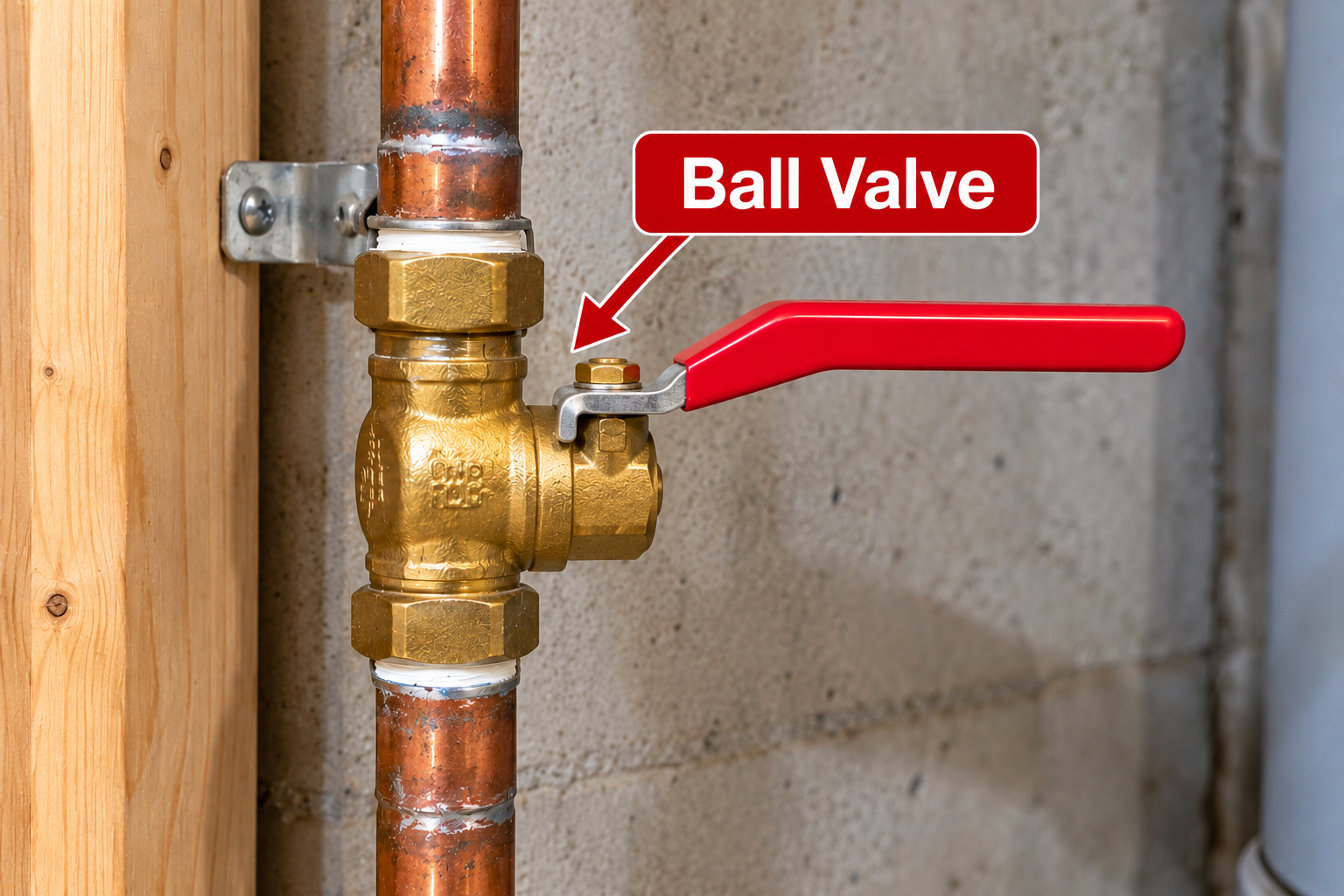
Ball Valves
A ball valve typically has a straight lever-style handle.
These valves usually operate with a quarter turn.
When the handle is parallel to the pipe, the valve is generally open.
When the handle is perpendicular to the pipe, the valve is generally closed.
Ball valves are commonly used in residential plumbing because they are relatively simple to operate.
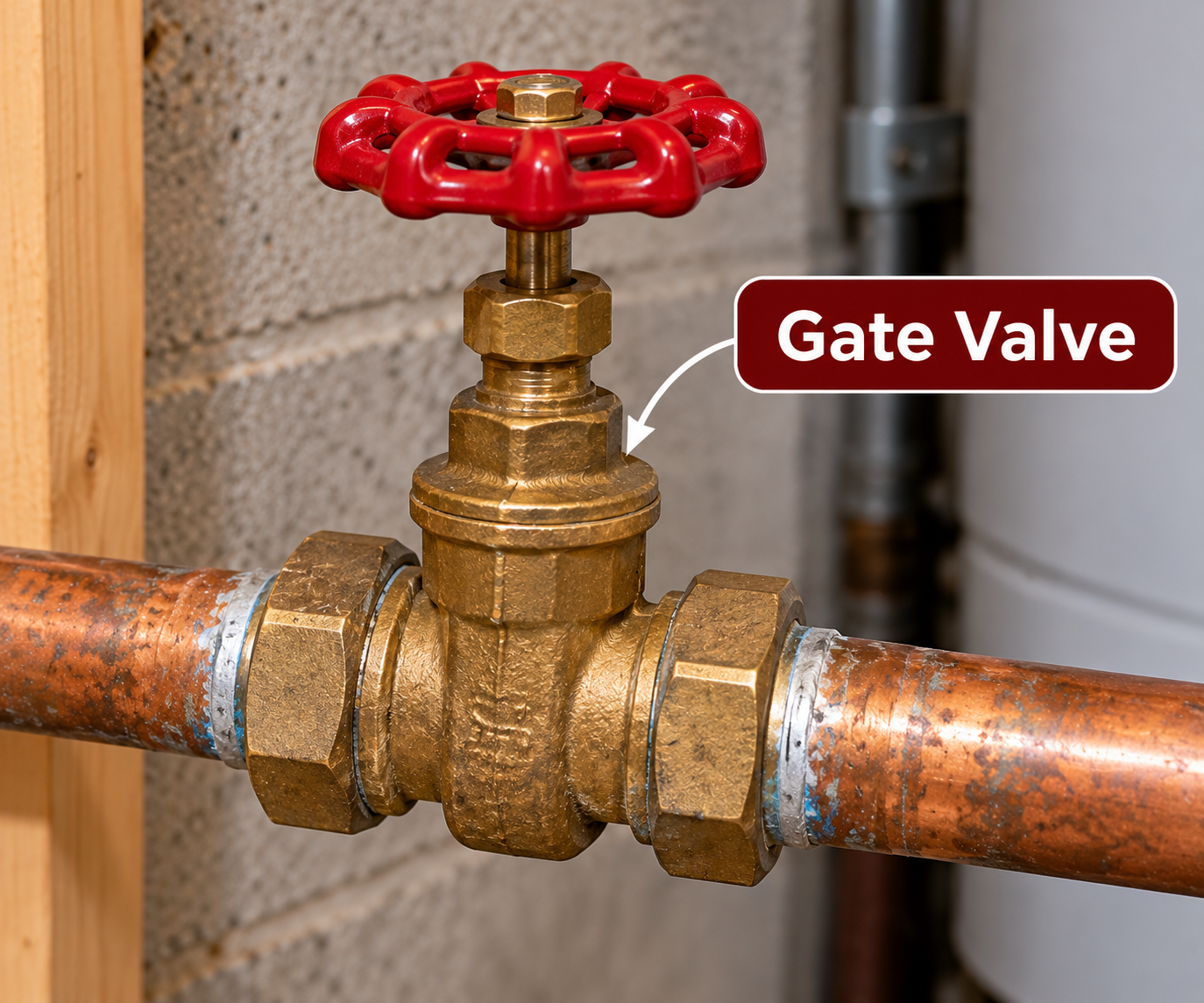
Gate Valves
A gate valve typically has a round handle that resembles a small wheel.
Unlike a ball valve, a gate valve requires multiple turns to open or close.
Turning the handle clockwise generally closes the valve.
Turning the handle counterclockwise generally opens the valve.
Gate valves are found in many older plumbing installations.
Over time, these valves may become difficult to operate due to age, corrosion, or internal wear.
Important: Never force a shutoff valve that is stuck or difficult to turn. Excessive force can damage the valve or connected plumbing and potentially create a leak.
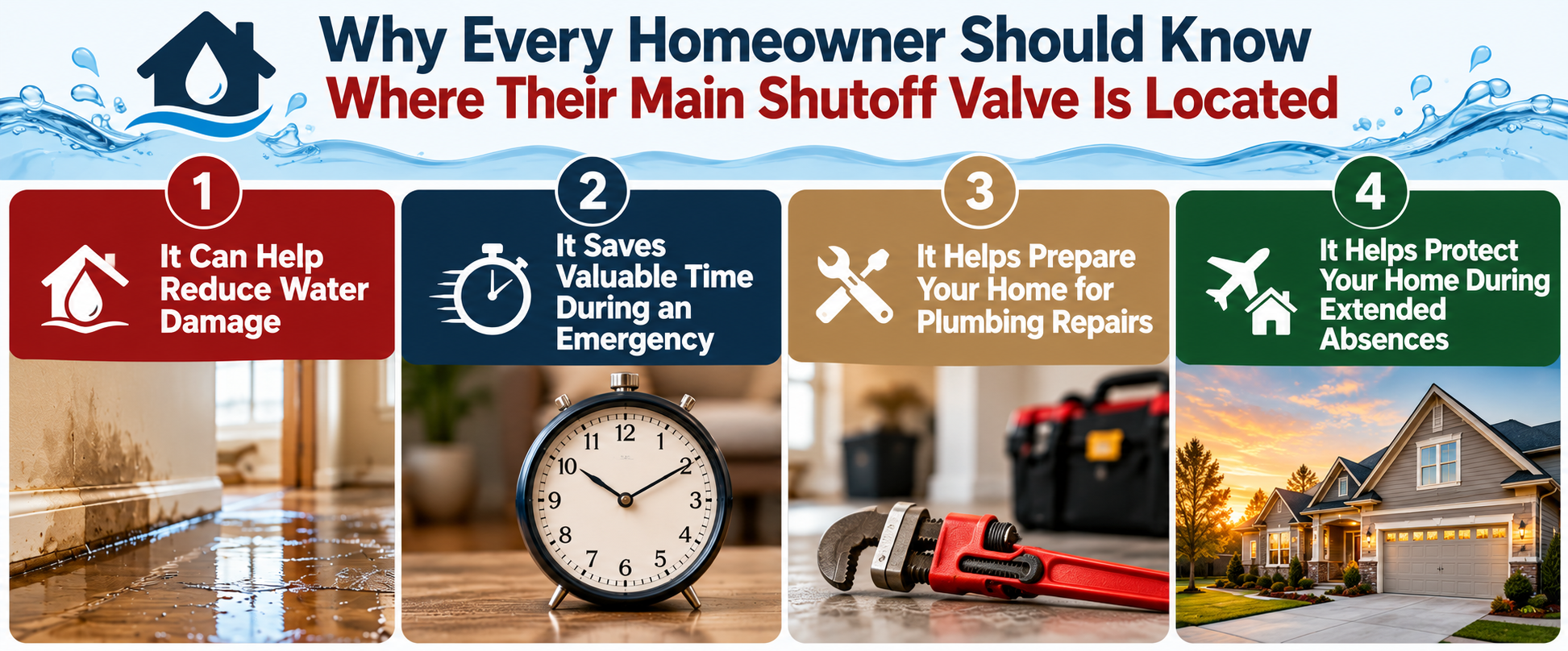
Why Every Homeowner Should Know Where Their Main Shutoff Valve Is Located
Knowing where your main water shutoff valve is located isn't just helpful during a plumbing repair. It can play an important role in protecting your property.
1. It Can Help Reduce Water Damage
Water damage can spread quickly when a pressurized supply line breaks.
Depending on the location and severity of the leak, water may reach flooring, walls, cabinets, insulation, and personal belongings.
Knowing how to shut off the water allows you to respond more quickly and potentially reduce the amount of damage.
2. It Saves Valuable Time During an Emergency
Imagine discovering a broken pipe while getting ready for work.
Instead of searching through closets, checking underneath the house, or trying to figure out which valve controls the water, you can go directly to the correct location.
The less time spent searching, the sooner you can stop additional water from entering the plumbing system.
3. It Helps Prepare Your Home for Plumbing Repairs
Certain plumbing repairs require the water supply to be shut off before work can safely begin.
Knowing where the valve is located can make it easier for a plumbing professional to prepare the system for repairs.
4. It Helps Protect Your Home During Extended Absences
Some homeowners choose to turn off their main water supply when leaving their property unoccupied for an extended period.
This may help reduce the risk of damage from certain plumbing leaks that could otherwise go unnoticed.
However, turning off the water isn't appropriate for every property. Well systems, fire sprinkler systems, heating equipment, and other water-dependent systems may require special consideration.
Consult a qualified professional before shutting off your home's water supply for an extended period.
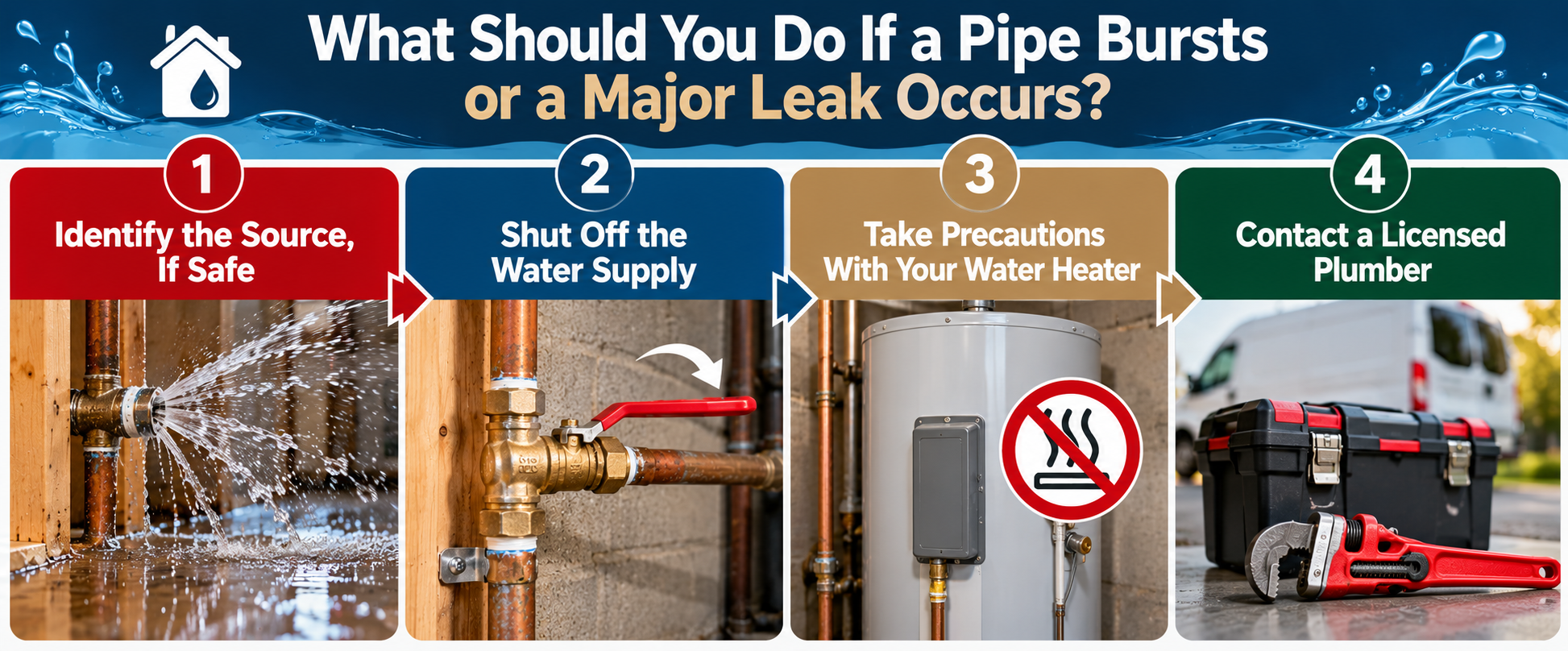
What Should You Do If a Pipe Bursts or a Major Leak Occurs?
If you experience a significant plumbing leak, knowing what to do can help you respond more safely.
Step 1: Identify the Source, If Safe
If you can safely determine where the water is coming from, take note of the affected area.
Avoid standing water near electrical outlets, appliances, electrical panels, or exposed wiring.
Step 2: Shut Off the Water Supply
Locate your main water shutoff valve and carefully turn it to the closed position.
If your home uses a private well, additional steps may be necessary to stop the well pump from supplying water.
Step 3: Take Precautions With Your Water Heater
If your water supply has been interrupted, be aware that certain water heaters can be damaged if operated without sufficient water.
Electric water heater heating elements should never operate without being fully submerged.
If necessary, have a qualified professional advise you on safely shutting down the equipment.
Step 4: Contact a Licensed Plumber
Once the immediate water supply has been stopped, contact a licensed plumbing professional to evaluate the issue.
A plumber can help identify the cause of the leak, determine the appropriate repair, and verify that the plumbing system is safe to return to service.
Should You Check Your Main Water Shutoff Valve Regularly?
Yes. Knowing where the valve is located is only part of being prepared.
You also want to know whether it works properly.
Like other plumbing components, shutoff valves can deteriorate over time.
Corrosion, mineral buildup, worn internal components, and long periods without use can affect their operation.
If your valve is in good condition and safe to operate, you may carefully close it and check whether water stops flowing from a nearby faucet.
Once the test is complete, reopen the valve slowly.
If you notice leaking, corrosion, resistance, or any unusual behavior, stop and contact a licensed plumber.
A valve that cannot close properly may need repair or replacement.
What If Your Home Doesn't Have an Accessible Main Shutoff Valve?
Some homeowners discover that their main shutoff valve is difficult to reach, hidden behind stored belongings, located in an inconvenient crawl space, or no longer functioning correctly.
Others may not be able to locate one at all.
If this happens, a licensed plumber can inspect the water supply arrangement and determine whether an accessible shutoff valve can be installed or an existing valve should be replaced.
Having a reliable and accessible shutoff valve makes it easier to respond to plumbing problems before they become more serious.
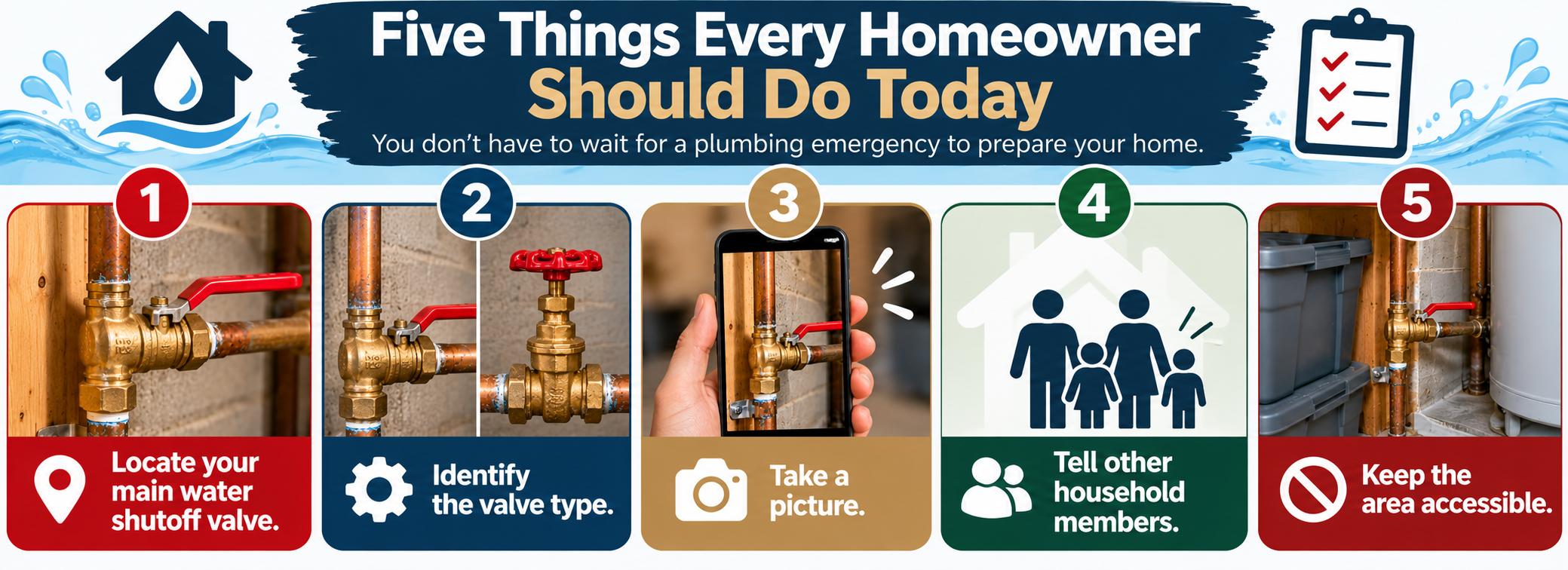
Five Things Every Homeowner Should Do Today
You don't have to wait for a plumbing emergency to prepare your home.
Take a few minutes to complete these simple steps:
Locate your main water shutoff valve. Find out exactly where the incoming water supply can be turned off.
Identify the valve type. Learn whether it uses a lever, wheel, or another operating mechanism.
Take a picture. Save a photo of the valve and its location on your phone for future reference.
Tell other household members. Make sure other responsible adults in your home know where the valve is and how to use it.
Keep the area accessible. Avoid blocking the valve with boxes, furniture, or stored belongings.
These small preparations can make a meaningful difference when an unexpected plumbing problem occurs.
A Little Plumbing Knowledge Goes a Long Way
Your home's plumbing system works behind the scenes every day, supplying the water you rely on for cooking, cleaning, bathing, and everyday activities.
While you don't need to understand every pipe and connection, knowing how to stop the water supply is one of the most practical things you can do as a homeowner.
The best time to locate your main water shutoff valve is before you need it.
Take a few minutes today to find yours, make sure it is accessible, and help your household become better prepared.
Need Help With Your Home's Plumbing? Contact Plumb Smart Plumbing.
At Plumb Smart Plumbing, we've been providing plumbing services in the Raleigh, North Carolina area since 1999.
Based in Youngsville, North Carolina, our team specializes in residential plumbing services, remodels and renovations, and new construction plumbing.
Whether you need help locating your main water shutoff valve, replacing an aging valve, or addressing another plumbing concern, we're here to help.
Plumb Smart Plumbing
Call or Text: (919) 899-4707
Website:https://plumbsmartplumbing.com
Serving Youngsville, Wake Forest, Raleigh, Louisburg, and surrounding North Carolina communities.
Plumb Smart Plumbing — Helping homeowners understand their plumbing, one helpful tip at a time.